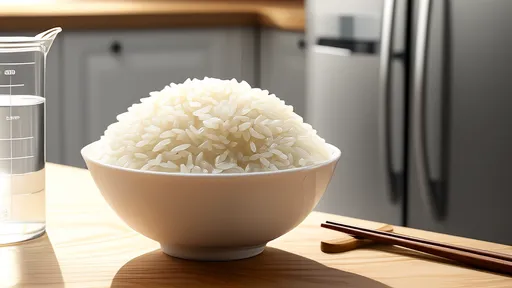
For home cooks and meal preppers, that container of leftover rice in the fridge might hold more nutritional potential than previously thought. Emerging research suggests refrigerating cooked rice for 24 hours could significantly boost its resistant starch content – a type of carbohydrate that behaves more like fiber in our digestive system.
The Science Behind Resistant Starch Formation
When rice cools after cooking, its starch molecules undergo a process called retrogradation. This molecular rearrangement transforms some digestible starches into resistant varieties that resist breakdown in the small intestine. Studies indicate this transformation continues gradually during refrigeration, with resistant starch content increasing by approximately 50% after a 24-hour chill.
Food scientists explain that the cooling process allows amylose molecules within the rice to form tighter crystalline structures. These restructured molecules become inaccessible to digestive enzymes, allowing them to pass through to the colon where they feed beneficial gut bacteria instead of being absorbed as glucose.
Practical Implications for Home Cooking
This discovery has particular relevance for populations where rice forms a dietary staple. The increased resistant starch content offers multiple potential health benefits, including better blood sugar management and improved gut health. Interestingly, reheating the chilled rice doesn't appear to significantly diminish the resistant starch content, making this a practical food preparation technique.
Nutritionists note that while the percentage increase sounds substantial, the actual gram amount remains relatively small. A typical serving of white rice might contain about 0.5 grams of resistant starch when freshly cooked, increasing to approximately 0.75 grams after refrigeration. However, when consumed regularly, these small differences could contribute meaningfully to overall fiber intake.
Culinary Considerations and Food Safety
While the starch transformation presents potential benefits, food safety experts emphasize proper handling practices. Rice should be cooled quickly and refrigerated within two hours of cooking to prevent bacterial growth. The ideal storage temperature is below 5°C (41°F), and refrigerated rice should be consumed within three to four days.
Some chefs have begun incorporating this knowledge into their meal preparation routines. "We've started cooking larger batches of rice specifically to chill overnight," explains one restaurant chef. "The texture actually improves for certain dishes like fried rice or rice salads, and now we know there's a nutritional benefit too."
Broader Implications for Public Health
This simple food preparation technique could have meaningful implications for public health nutrition strategies. In regions where rice consumption is high and diabetes rates are climbing, promoting proper rice storage methods might offer a low-cost dietary intervention. Health organizations are beginning to include these preparation tips in their nutritional guidelines.
Researchers caution that more studies are needed to fully understand how different rice varieties respond to cooling and how preparation methods affect resistant starch formation. Brown rice, for instance, already contains more fiber and resistant starch than white rice, but appears to show a similar percentage increase when refrigerated.
The discovery highlights how traditional food preparation methods may have unintentionally optimized nutritional content long before modern science understood the mechanisms. Many cultures have historically prepared rice dishes using leftover chilled rice, from Japanese sushi to Spanish paella, suggesting an intuitive understanding of its improved culinary and possibly nutritional properties.

By /Aug 11, 2025
By /Aug 11, 2025

By /Aug 11, 2025

By /Aug 11, 2025

By /Aug 11, 2025

By /Aug 11, 2025

By /Aug 11, 2025

By /Aug 11, 2025

By /Aug 11, 2025

By /Aug 11, 2025

By /Aug 11, 2025
By /Aug 11, 2025

By /Aug 11, 2025

By /Aug 11, 2025

By /Aug 11, 2025

By /Aug 11, 2025

By /Aug 11, 2025

By /Aug 11, 2025

By /Aug 11, 2025
By /Aug 11, 2025