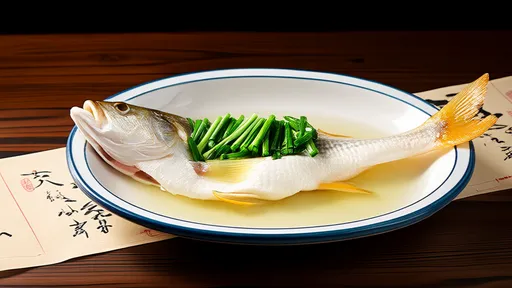
The art of steaming fish is a delicate balance between preserving the natural flavors of the seafood while eliminating any unpleasant fishy odors that might linger. Across many Asian culinary traditions, chefs have perfected what's often referred to as the "holy trinity" of fish preparation - a simple yet remarkably effective combination of scallions, ginger, and rice wine that transforms even the fishiest specimens into clean, fragrant dishes worthy of any dining table.
At the heart of this technique lies an understanding of how different ingredients interact with the compounds that cause fishy odors. When fresh fish begins to develop that characteristic smell, it's primarily due to the breakdown of proteins into amines like trimethylamine. These volatile organic compounds are what our noses detect as "fishiness," and the trio of scallions, ginger, and rice wine works synergistically to neutralize them through various chemical and aromatic mechanisms.
Scallions as the foundation play a crucial role that goes beyond mere decoration. When placed beneath the fish during steaming, the scallion segments create a physical barrier that prevents the fish from sticking to the plate while simultaneously allowing their aromatic compounds to penetrate upward. The allium family to which scallions belong contains sulfur compounds that actively bind with fishy odors. As steam rises during cooking, these compounds are carried into the fish flesh, replacing unpleasant odors with fresh, oniony notes that complement rather than overpower the seafood's natural taste.
The ginger slices pressed against the fish's belly serve multiple purposes in this aromatic defense system. Ginger contains potent enzymes like zingibain that help break down proteins, along with aromatic compounds such as gingerol that mask any remaining fishy notes. Positioning the ginger in the abdominal cavity is particularly strategic, as this area often contains stronger-tasting organs and fatty tissues that can contribute significantly to fishy flavors. The heat from steaming causes the ginger to release its juices directly into these problematic areas, ensuring thorough deodorization where it's needed most.
No discussion of fish preparation would be complete without addressing the transformative power of rice wine. When drizzled over the fish before steaming, the alcohol in rice wine helps volatilize and carry away fishy compounds while its subtle sweetness balances any remaining harsh flavors. The fermentation process that creates rice wine produces numerous aromatic esters and organic acids that react with fish proteins to create new, more pleasant flavor compounds. As the alcohol evaporates during cooking, it takes with it many of the undesirable odor molecules, leaving behind only the wine's delicate fragrance.
What makes this combination particularly brilliant is how each element complements the others. The scallions provide a fresh, green aroma that cuts through richness, while the ginger adds warmth and spice to counteract any lingering fishiness. The rice wine then bridges these flavors, its mild sweetness rounding out any sharp edges. Together, they create a harmonious flavor profile that enhances rather than masks the fish's natural taste - the hallmark of skilled seafood preparation.
Professional chefs have developed numerous variations on this basic formula based on regional preferences and specific fish varieties. Some might add a few extra slices of ginger to the scallion base for additional fragrance, while others might substitute different varieties of rice wine depending on the desired flavor profile. The timing of when these ingredients are applied also affects the final result - adding some rice wine after steaming as well as before can create more complex layers of flavor.
The science behind why this combination works so well continues to fascinate food researchers. Studies have shown that the sulfur compounds in alliums like scallions can chemically bind with trimethylamine to form non-volatile compounds that don't reach our olfactory receptors. Meanwhile, the protease enzymes in ginger break down the proteins that would otherwise contribute to fishy tastes as they degrade. Rice wine's alcohol acts as a solvent for odor molecules while its acidity helps denature proteins that cause unpleasant textures.
Beyond its technical merits, this preparation method represents a culinary philosophy that values simplicity and respect for ingredients. Rather than drowning the fish in heavy sauces or aggressive spices, it uses minimal additions that enhance the fish's natural qualities. The technique works equally well with delicate white fish like flounder as it does with oilier varieties like mackerel, adjusting the proportions slightly based on the fish's intensity.
For home cooks looking to master this method, quality ingredients make all the difference. Fresh, firm scallions with bright green tops and white bulbs that show no signs of wilting will provide the most aromatic base. Young ginger with thin, shiny skin contains higher concentrations of active enzymes than older, fibrous roots. As for rice wine, premium varieties like Shaoxing wine offer more complex flavors than basic cooking versions, though even standard grocery store options will work in a pinch.
The preparation method itself is beautifully straightforward. After cleaning and scoring the fish, a bed of scallion segments is arranged on the steaming plate. The fish is placed atop this aromatic mattress, with ginger slices tucked into its cavity and perhaps a few more laid along its back. A generous splash of rice wine is then drizzled over everything just before steaming. The heat does the rest of the work, circulating the flavors and carrying the deodorizing compounds throughout the fish as it cooks.
This technique's effectiveness has made it a cornerstone of professional kitchen practice, though its origins undoubtedly lie in home cooking traditions passed down through generations. Its staying power comes not just from its efficacy, but from the way it represents a balanced approach to flavor enhancement - one that understands sometimes the best way to make something taste good is to help it taste more like itself.
Modern variations on the theme might include adding citrus elements like lime leaves or lemongrass to the scallion base, or incorporating mushrooms for additional umami depth. Some contemporary chefs have experimented with using the same trio in different forms - scallion oil instead of fresh segments, ginger juice rather than slices, or rice wine reductions for more concentrated flavor. Yet the fundamental principle remains unchanged: three simple ingredients working in concert to elevate the natural qualities of fresh fish.
As global palates become more sophisticated and health-conscious cooking methods like steaming gain popularity, this traditional approach to fish preparation continues to find new audiences. Its appeal lies not just in the delicious results it produces, but in the elegant simplicity of its execution - a reminder that sometimes the most effective solutions are also the most straightforward. Whether in a high-end restaurant or a home kitchen, the scallion-ginger-rice wine trifecta remains one of cookings most reliable methods for transforming ordinary fish into something extraordinary.

By /Aug 11, 2025
By /Aug 11, 2025

By /Aug 11, 2025

By /Aug 11, 2025
By /Aug 11, 2025
By /Aug 11, 2025
By /Aug 11, 2025

By /Aug 11, 2025
By /Aug 11, 2025

By /Aug 11, 2025
By /Aug 11, 2025

By /Aug 11, 2025
By /Aug 11, 2025

By /Aug 11, 2025
By /Aug 11, 2025

By /Aug 11, 2025

By /Aug 11, 2025

By /Aug 11, 2025
By /Aug 11, 2025
By /Aug 11, 2025
